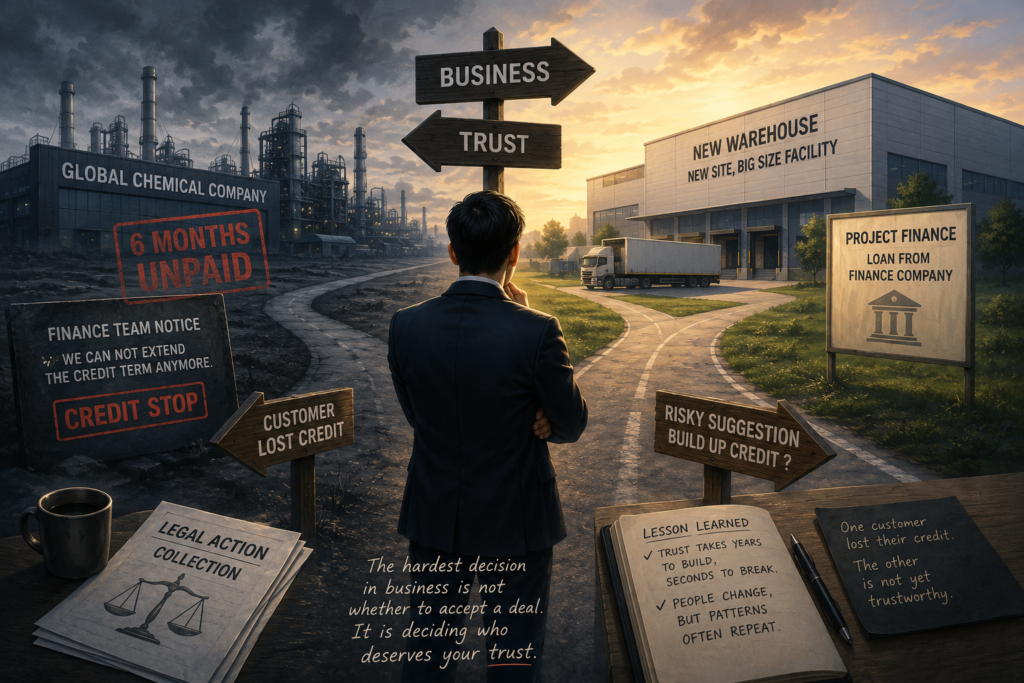
Credit and Trust
Today reminded me that business is ultimately about trust.
One of our global customers in the chemical industry has not paid us for more than six months. They were once a well-respected company, but things have changed. Today, I received a notice from our finance team stating that we can no longer extend their credit terms.
I understand the decision.
I am preparing to inform the customer that we can only continue business on a prepayment basis. Although they keep promising to settle the outstanding balance, we may eventually have to take legal action to recover the money.
While I was dealing with this situation, I received an unexpected phone call.
It was from the developer of a newly built warehouse—a large logistics facility financed through project financing. They wanted to meet me to discuss a potential business opportunity.
Normally, I would have been excited.
But this call brought back painful memories.
Years ago, I worked with a similar company. I gave everything I had to help their business succeed. When I was no longer useful, I was dismissed. They even filed a lawsuit against me, forcing me to go through police investigations, the prosecutor’s office, and the court.
In the end, I was cleared, but the experience changed the way I think about trust.
The people who called me today are different, but the type of business reminds me of the past.
Today, I decided to let one customer go because they had lost our trust.
At the same time, I received an opportunity that could become another risky relationship.
One customer has already lost its credit.
The other has not yet earned my trust.
Yet, as someone in sales, I cannot simply walk away from every difficult opportunity. My job is to build business, create value, and make decisions despite uncertainty.
Over the years, I have learned that contracts create transactions, but trust creates long-term business.
Sometimes the hardest decision in business is not whether to accept a deal.
It is deciding who deserves your trust.
거래와 신뢰
오늘 두 통의 이야기가 동시에 내 앞에 놓였다.
첫 번째는 오래 거래해 온 고객사였다.
한때는 세계적인 석유화학 기업이었다. 우리 회사에서도 반드시 확보해야 할 글로벌 고객으로 분류됐고, 처음 문을 두드린 사람도 나였다. 어렵게 거래를 시작했고, 수년 동안 함께 일했다.
하지만 올해 들어 상황이 달라졌다.
담당자가 바뀌고, 회사의 경영 악화 소식이 하나둘 들려오기 시작했다. 그리고 거래대금은 6개월째 입금되지 않고 있다.
오늘 재경부로부터 메일을 받았다.
더 이상 신용거래는 불가능하다는 내용이었다.
나도 그 판단에 동의했다.
앞으로는 선지급이 확인된 건만 진행하겠다고 고객에게 전달하기로 했다. 체납된 금액은 지급하겠다고 약속하고 있지만, 상황이 더 악화된다면 결국 추심까지 검토해야 할 수도 있다.
오랫동안 쌓아 온 신뢰는 숫자 앞에서 멈춰 섰다.
그런데 그 순간 또 다른 전화가 걸려왔다.
새롭게 물류창고를 오픈하는 곳이었다.
나와는 오래된 인연이 있는 곳이다.
PF 자금으로 대규모 창고를 개발한 시행사였고, 그들이 나를 만나고 싶다고 했다.
하지만 그 이름을 듣는 순간 가장 먼저 떠오른 것은 사업 기회가 아니었다.
과거의 기억이었다.
예전에 그들이 시행하던 창고에서 일했다.
회사를 위해 누구보다 열심히 뛰었다.
하지만 필요할 때는 함께였고, 필요가 없어지자 나는 해고됐다.
고소까지 당했고, 조사도 받았으며 법정에도 섰다.
결국 아무 일도 없었지만, 그 과정은 사람에 대한 신뢰를 다시 생각하게 만들었다.
오늘 나는 한 고객에게는 더 이상 신용을 줄 수 없다고 이야기했다.
그리고 다른 한 곳에서는 다시 손을 내밀고 있었다.
한 곳은 신용이 끊겼다.
한 곳은 신용을 쌓을 수 없는 곳이다.
그럼에도 나는 영업을 해야 한다.
매출을 만들어야 하고, 새로운 거래를 찾아야 한다.
비즈니스는 결국 숫자로 평가받는다.
하지만 숫자를 만드는 것은 결국 사람이다.
신용은 계약서보다 먼저 만들어지고, 계약서보다 늦게 무너진다.
영업을 오래 하면서 배운 것은 거래는 계약으로 시작할 수 있지만, 오래가는 거래는 결국 신뢰로 이어진다는 사실이다.
그래서 오늘 나는 다시 고민한다.
새로운 기회를 잡아야 하는가.
아니면 과거가 알려준 경고를 믿어야 하는가.
비즈니스에서 가장 어려운 결정은 ‘할 것인가, 말 것인가’가 아니다.
‘믿을 것인가, 믿지 말 것인가’다.