Read this article in English ↓
THREE PERSPECTIVES · EP.003
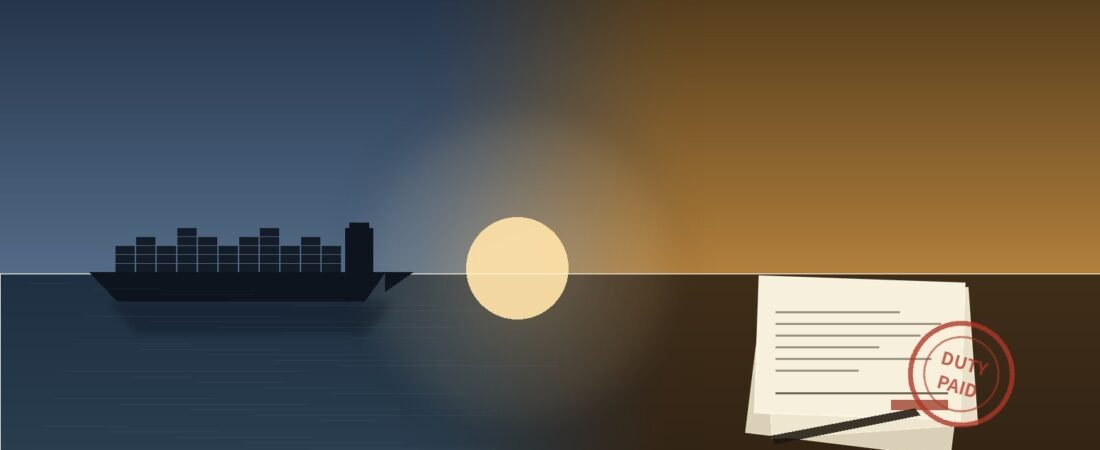
청구서는 바다 위에 먼저 도착한다
관세는 7월 24일에 바뀌었다. 운임은 그보다 몇 주 먼저 움직였다. 무역 전쟁의 진짜 속보는 뉴스가 아니라 항로 위에 있다.
“세계(世界)를, 세 개(三個)의 시선으로 읽는다.”
우리는 뉴스를 읽지 않습니다. 우리는 세상을 읽습니다.
Introduction — 두 개의 금요일
7월 24일 금요일, 워싱턴.
미국의 10% 전 세계 관세, 이른바 Section 122 관세가 150일 법정 시한을 채우고 만료됐다. 같은 날 미국 무역대표부는 그 자리를 새 관세로 채웠다. 약 60개 교역국을 두 줄로 세우는 Section 301 체제. 강제노동 수입 방지 장치를 일부라도 갖춘 나라에는 낮은 세율, 나머지에는 12.5%.
뉴스는 이날을 “관세가 바뀐 날”로 기록했다.
그러나 부산의 어느 포워더 사무실에서는, 이날 아무 일도 일어나지 않았다.
운임표는 이미 몇 주 전부터 말하고 있었기 때문이다. 상하이발 로스앤젤레스행 스팟 운임은 그 주에 6% 떨어져 FEU당 5,878달러. 뉴욕행은 4% 떨어진 7,598달러. 6월과 7월 초를 뜨겁게 달군 밀어내기 선적, 이른바 프런트로딩은 끝나 있었다. 화주들은 관세 발효일보다 먼저 배를 채웠고, 먼저 멈췄다.
법은 국경에서 바뀐다. 비용은 바다 위에서 먼저 바뀐다.
이번 화는 그 시차(時差)에 관한 이야기다.
① 세계의 시선 — 같은 관세, 다른 조명
이번에도 세계 언론은 같은 사건에 서로 다른 조명을 켰다.
워싱턴발 정치 뉴스의 조명은 달력을 비춘다. CNBC는 7월 23일, “글로벌 관세 만료와 동시에 60개 교역국에 대한 전면적 신규 관세”를 속보로 전했다. 이 조명 아래에서 관세는 드라마다. 마감일이 있고, 서명이 있고, 상대국의 반응이 있다. 사건은 발효일에 일어난다.
해운 전문지의 조명은 곡선을 비춘다. 로이즈리스트와 로드스타 같은 매체들은 같은 주에 스팟 운임의 완만한 하락과 선사들의 공급 조절을 다뤘다. 아시아–유럽 항로에서 다음 주 4편의 결항이 예고됐다. 전주보다 2편 늘어난 숫자다. 이 조명 아래에서 관세는 드라마가 아니라 수요 함수의 변수 하나다. 사건은 발효일이 아니라, 화주가 선적을 결정하는 순간마다 조금씩 일어난다.
운임 데이터 플랫폼의 조명은 더 건조하다. 프레이토스의 7월 22일 주간 브리핑은 미서안 -6%, 미동안 보합, 북유럽 -2%, 지중해 -4%라는 네 개의 숫자로 한 주를 요약했다. 그리고 한 문장을 덧붙였다. 성수기가 예년보다 일찍 식고 있다.
세 조명은 서로 다른 곳을 비추지만, 하나의 전제를 공유한다. 관세를 정책의 언어로 읽는다는 것. 그런데 관세를 가장 먼저, 가장 정직하게 번역하는 언어는 따로 있다. 가격이다. 그 가격이 매겨지는 곳으로 가보자.
② 또 하나의 세계 — 각자의 계산서
브라질 — 보복하지 않는 것도 계산이다
7월 22일, 브라질산 수입품에 대한 25% 관세가 발효됐다. 커피, 소고기, 오렌지주스, 의약품 등 1,600여 개 품목은 면제됐다. 미국 소비자의 아침 식탁을 건드리지 않겠다는 계산이 면제 목록에 그대로 적혀 있다.
흥미로운 것은 브라질의 대응이다. 룰라 정부는 즉각 보복하지 않았다. 상호주의법 절차는 개시하되 맞불 관세는 유보했고, WTO 제소와 협상을 앞세웠다. 알크민 부통령과 산업계가 정부를 말렸다. 빠른 보복은 미국이 아니라 브라질 수출업자를 먼저 다치게 한다는 이유였다. 관세 대상 수출은 2024년 기준 약 74억 달러, 대미 수출의 18%. 산업연맹은 영향권을 26%까지 본다. 보복의 비용을 아는 나라는 신중해진다. 계산서를 받아본 쪽이 먼저 침착해지는 역설.
캐나다 — 위반을 말하면서 협상장을 여는 나라
캐나다에는 더 무거운 청구서가 예고돼 있다. 7월 20일 서명된 포고문에 따라 8월 19일부터 자동차, 주류, 유제품, 가구 등에 50% 관세가 적용된다. 근거는 1930년 관세법의 Section 338. 주목할 대목은 이 관세가 USMCA상 무관세 자격이 있는 상품에도 적용된다는 점이다. 협정이 살아 있는데 협정 밖의 법으로 과세하는 구조.
카니 총리는 “USMCA 위반”이라고 말했다. 그리고 같은 입으로 협상 의사를 밝혔다. 온타리오 주지사는 관세에는 관세로 맞서자고 주장한다. 위반을 선언하는 언어와 협상장을 여는 언어가 한 정부 안에 공존한다. 8월 19일까지 남은 시간이 곧 협상 시한이다.
한국 — 12.5%의 대기실
한국은 아직 청구서를 받지 않았다. 대신 대기실에 앉아 있다. 새 Section 301 체제는 강제노동 수입 방지 장치를 기준으로 교역국을 두 등급으로 나눈다. 장치를 갖춘 나라는 10%, 미비한 나라는 12.5%. 한국은 이 심사의 대상국에 포함된 것으로 전해졌다. 6월 2일 제안, 7월 초 의견 수렴과 공청회. 국가별 최종 분류와 시행의 세부는 이 글을 쓰는 시점에도 움직이고 있다.
2.5%포인트 차이가 작아 보인다면, 수출 단가표를 열어보면 된다. 반도체와 자동차부품의 마진 구조에서 2.5%포인트는 계약 하나의 성패를 가르는 숫자다. 그리고 그 판정 기준이 관세율표가 아니라 공급망의 노동 실사라는 점이, 이 새 체제의 진짜 얼굴이다. 관세가 무역 정책을 넘어 공급망 규범의 집행 도구가 되고 있다.
미국 — 관세를 냈다가 돌려받는 나라
그리고 이 모든 소동의 진원지에는 기묘한 장부가 하나 있다. 미국 정부는 위헌 판정된 IEEPA 관세의 환급을 진행 중이다. 7월 10일까지 누적 863억 달러. 6월 한 달에만 491억 달러가 수입업자들에게 되돌아갔다. 걷었던 관세를 돌려주면서, 동시에 새 관세를 걷기 시작하는 나라. 무역 정책이 법정과 행정명령 사이를 오가는 동안, 기업들의 재무제표에는 냈다가 돌려받고 다시 내는 관세가 세 줄로 적힌다.
③ AURA의 시선 — 운임은 관세의 그림자 가격이다
여기서부터는 AURANIM의 독자적인 분석이다.
관세는 국경에서 걷힌다. 그러나 비용은 바다 위에서 먼저 생긴다. 이번 한 달의 데이터가 이 명제를 깨끗하게 증명했다.
순서를 다시 보자. 관세 시한은 7월 24일이었다. 그런데 6월과 7월 초의 미국행 수입 급증, 즉 프런트로딩이 먼저 있었다. 화주들이 관세를 피해 물량을 앞당긴 것이다. 이것은 사실상 관세의 선불(先拂)이다. 세금이 발효되기 전에, 시장은 이미 그 세금의 비용을 운임과 재고 비용의 형태로 지불했다. 그리고 발효일이 다가오자 선적이 멈췄고, 운임은 하락으로 돌아섰다. 미서안 -6%는 단순한 시황 숫자가 아니라, 아직 존재하지 않는 관세가 만들어낸 실물 반응이다.
그래서 운임은 관세의 그림자 가격이다. 정책이 확정되기 전에, 그 정책의 기대 비용이 운임 곡선에 먼저 어른거린다. 항로는 여론조사보다 빠르고, 성명서보다 정직하다. 브라질이 보복을 유보한 것도, 캐나다가 협상장을 연 것도, 발표문을 읽기 전에 물동량 장부를 읽으면 예측 가능한 행동이었다. 수출의 18%가 걸린 나라는 성명서와 다르게 움직인다.
실무의 언어로 번역하면 세 가지다.
첫째, 화주에게. 지금 같은 국면에서 연간 계약운임과 스팟의 스프레드는 관세 불확실성의 보험료다. 발효일 직전의 밀어내기는 이번처럼 운임 급등과 급락을 함께 만든다. 다음 데드라인이 보이면, 시장 전체가 같은 계산을 한다는 것까지 계산에 넣어야 한다. 모두가 서두르는 순간에는 서두름 자체가 비용이 된다.
둘째, 선사를 보는 눈에. 수요가 식는데 운임이 완만하게만 빠지는 이유는 결항, 즉 공급의 인위적 감축이다. 아시아–유럽 4편 결항은 신호다. 선사들은 2010년대의 치킨게임을 반복하지 않겠다는 규율을 유지하고 있다. 운임의 바닥은 수요가 아니라 이 규율이 결정한다.
셋째, 지정학 변수는 사라지지 않았다. 호르무즈 해협 통항은 최저 수준으로 줄었고, 홍해의 위협은 여전하다. 관세가 수요를 누르는 동안, 지정학은 언제든 공급을 조일 수 있다. 수요 하락과 공급 충격이 겹치는 순간, 운임 곡선은 방향을 예고 없이 바꾼다.
AURA Insight
무역 전쟁을 이해하는 두 개의 달력이 있다. 하나는 정책의 달력이다. 서명일, 발효일, 협상 시한. 뉴스는 이 달력을 따라 움직인다. 다른 하나는 화물의 달력이다. 부킹이 잡히는 날, 배가 뜨는 날, 운임이 갱신되는 금요일. 돈은 이 달력을 따라 움직인다.
두 달력의 시차가 곧 정보의 가치다. 정책의 달력만 보는 사람에게 7월 24일은 시작이었지만, 화물의 달력을 보는 사람에게 그날은 이미 정산일이었다. 프런트로딩이라는 선불, 운임 하락이라는 영수증. 청구서는 바다 위에 먼저 도착해 있었다.
이 시차는 앞으로 더 벌어질 것이다. 관세가 세율의 문제에서 공급망 실사의 문제로 진화하고 있기 때문이다. 강제노동 기준으로 세율이 갈리는 체제에서, 기업이 준비해야 하는 것은 관세사가 아니라 공급망 지도다. 세율은 협상으로 바뀌지만, 공급망은 하루아침에 바뀌지 않는다. 그래서 다음 무역 전쟁의 승부는 발표일이 아니라, 그 몇 년 전의 소싱 결정에서 이미 갈려 있을 것이다.
세계를 이해하는 것은 더 많은 뉴스를 읽는 일이 아니다. 뉴스보다 먼저 움직이는 현실을 읽는 일이다. 그 현실은 지금도 바다 위에 있다.
AURA Question
당신의 일에서, 정책의 달력과 현실의 달력은 얼마나 어긋나 있는가 — 그리고 당신은 어느 달력으로 결정을 내리고 있는가.
English Edition — The Bill Arrives at Sea First
The tariffs changed on July 24. Freight rates moved weeks earlier. The real breaking news of a trade war is not in the headlines. It is on the water.
Introduction — Two Fridays
Friday, July 24. Washington.
America’s 10 percent global tariff — the Section 122 levy — expired at its 150-day statutory limit. The same day, the U.S. Trade Representative filled the vacancy with something new: a Section 301 regime sorting roughly sixty trading partners into two lines. A lower rate for countries with at least partial safeguards against forced-labor imports. Twelve and a half percent for the rest.
The news recorded this as the day the tariffs changed.
But in a freight forwarder’s office in Busan, nothing happened that day.
The rate sheet had been talking for weeks. Shanghai to Los Angeles fell 6 percent that week, to $5,878 per container. Shanghai to New York slipped 4 percent, to $7,598. The great rush of June and early July — shippers front-loading cargo ahead of the deadline — was already over. Importers had filled their ships before the tariff arrived, and stopped before it arrived too.
Laws change at the border. Costs change at sea, and they change first.
This episode is about that gap in time.
① The Global Lens — Same Tariff, Different Lighting
Once again, the world’s media pointed different lights at the same event.
The Washington political lens lights up the calendar. CNBC led with “sweeping new tariffs on 60 trade partners as global duties expire.” Under this light, a tariff is drama: a deadline, a signature, a foreign reaction. The event happens on the effective date.
The shipping trade press lights up the curve. Lloyd’s List and The Loadstar spent the same week on gently falling spot rates and carriers cancelling sailings — four blank sailings on Asia–Europe for the coming week, two more than the week before. Under this light, a tariff is not drama. It is one variable in a demand function, and the event happens a little at a time, every time a shipper decides whether to book.
The data platforms are drier still. Freightos summarized the week of July 22 in four numbers: West Coast down 6, East Coast flat, North Europe down 2, the Mediterranean down 4. And one sentence: peak season is cooling early.
Three lights, one shared assumption — that tariffs are best read in the language of policy. But there is a language that translates tariffs earlier and more honestly than any communiqué. Price. Let us go where the prices are set.
② The Other World — Everyone’s Own Invoice
Brazil — Not Retaliating Is Also Arithmetic
On July 22, a 25 percent tariff on Brazilian goods took effect. Coffee, beef, orange juice and pharmaceuticals were among more than 1,600 exempted lines — the American breakfast table, carefully carved out of the dispute.
What is interesting is Brasília’s response. Lula’s government did not strike back. It opened proceedings under its Reciprocity Law but held its counter-tariffs, preferring the WTO and the negotiating table. Vice President Alckmin and Brazilian industry talked the government down: fast retaliation would wound Brazil’s own exporters first. Roughly $7.4 billion of exports are in the line of fire — 18 percent of what Brazil sells to America; the national industry confederation puts the exposure at 26 percent. A country that has read its own invoice becomes careful. The side holding the bill calms down first.
Canada — Declaring a Violation While Opening the Door
Canada’s bill is heavier, and it is postdated. Proclamations signed on July 20 impose a 50 percent duty on autos, alcohol, dairy and furniture from August 19, under Section 338 of the Tariff Act of 1930. The striking detail: the duty applies even to goods that qualify for zero percent under USMCA. The agreement lives on; the tax simply walks around it.
Prime Minister Carney called it a violation of USMCA — and in the same breath offered talks. Ontario’s premier wants tariff answered with tariff. A government speaking two languages at once: the language of breach and the language of the negotiating room. The days until August 19 are the real negotiation deadline.
Korea — The Waiting Room of 12.5 Percent
Korea has not yet received its bill. It is sitting in the waiting room. The new Section 301 regime grades trading partners by their defenses against forced-labor imports: 10 percent for those with safeguards, 12.5 percent for those without. Korea is reported to be among the countries under review — proposed June 2, comments and hearings in early July, final classifications still moving as this is written.
If 2.5 percentage points sounds small, open an export price sheet. In the margin structure of semiconductors and auto parts, 2.5 points decides contracts. And the deeper story is the criterion itself: not a tariff schedule but a labor audit of your supply chain. The tariff is evolving from a trade tool into an enforcement mechanism for supply-chain norms.
The United States — Collecting and Refunding at Once
At the center of it all sits a strange ledger. Washington is refunding tariffs collected under IEEPA measures struck down in court: $86.3 billion returned by July 10, including $49.1 billion in June alone. A country handing tariffs back with one hand while collecting new ones with the other. On corporate balance sheets, the same duty now appears three times — paid, refunded, paid again.
③ The AURA Perspective — Freight Is the Shadow Price of a Tariff
From here, the analysis is our own.
Tariffs are collected at the border. Costs are created at sea, and earlier. This month’s data proved the proposition cleanly.
Look at the sequence. The deadline was July 24. But the surge of U.S.-bound cargo came in June and early July — front-loading, shippers pulling volume forward to beat the duty. This is, in effect, a prepayment of the tariff. Before the tax existed, the market had already paid its cost in the currency of freight rates and inventory. As the deadline approached, bookings stopped, and rates turned down. That minus-6 percent on the West Coast is not a market statistic. It is the physical response to a tax that did not yet exist.
Freight, then, is the shadow price of the tariff. The expected cost of a policy flickers across the rate curve before the policy is signed. Shipping lanes are faster than opinion polls and more honest than press statements. Brazil’s restraint and Canada’s open door were both predictable — not from the speeches, but from the cargo ledgers. A country with 18 percent of its exports at stake behaves differently from its own rhetoric.
Translated into practice, three things.
For shippers: in a cycle like this, the spread between annual contract rates and spot is an insurance premium against tariff uncertainty. Deadline rushes create both the spike and the crash. When the next deadline appears, price in the fact that the entire market is doing the same arithmetic. When everyone hurries, hurrying itself becomes the cost.
For those watching carriers: demand is cooling, yet rates fall only gently — because supply is being withdrawn by hand. Four cancelled sailings on Asia–Europe is a signal. The carriers are keeping the discipline they lacked in the 2010s. The floor under freight rates is set not by demand but by that discipline.
And geopolitics has not left the room. Transits through Hormuz have fallen to minimal levels; the Red Sea threat persists. While tariffs press down on demand, geopolitics can squeeze supply at any moment. When falling demand meets a supply shock, the rate curve changes direction without notice.
AURA Insight
There are two calendars for understanding a trade war. The policy calendar: signing dates, effective dates, negotiation deadlines. News runs on this calendar. And the cargo calendar: the day a booking is made, the day a ship sails, the Friday the rate sheet updates. Money runs on this one.
The gap between the two calendars is the value of information. To those reading the policy calendar, July 24 was a beginning. To those reading the cargo calendar, it was settlement day — the prepayment called front-loading, the receipt called falling rates. The bill had already arrived at sea.
The gap will widen. Tariffs are evolving from a question of rates into a question of supply-chain audits. In a regime where duty levels turn on forced-labor standards, what a company needs is not a customs broker but a map of its own supply chain. Rates can change in a negotiation. Supply chains cannot change overnight. The next trade war will be decided not on announcement day, but in sourcing decisions made years before it.
Understanding the world is not reading more news. It is reading the reality that moves before the news does. That reality, right now, is on the water.
AURA Question
In your own work, how far apart are the policy calendar and the reality calendar — and which one are you using to decide?
Sources
사실 관계(운임·관세 수치)는 아래 보도·데이터에 근거하며, ③ AURA의 시선과 AURA Insight의 해석은 AURANIM의 편집적 분석입니다. 국가별 Section 301 분류 등 일부 사안은 발행 시점 기준 진행 중입니다. / Facts (rates and tariff figures) are drawn from the sources below; the interpretation in ③ and AURA Insight is AURANIM’s editorial analysis. Some measures, including country classifications under the new Section 301 regime, were still in motion at publication.
Drewry WCI via The Loadstar, “Container spot rates still falling, but gently” (2026.7.24) · Freightos Weekly Update (2026.7.22) · CNBC, “Trump imposes ‘sweeping’ new tariffs on 60 trade partners” (2026.7.23) · Tariffs Tool, “Tariff News 2026: Section 122 Expires, Section 301 Replaces It” · Rio Times, “US Tariff Brazil: Lula Delays Retaliation” · Forbes, “Carney Says Canada Is Open To Talks After Trump Imposes New 50% Tariffs” (2026.7.21) · KATI 농식품수출정보, “무역대표부, 대미 수출품 전반에 12.5% 추가 관세 부과 제안” · Lloyd’s List, “The rise and fall of container spot rates — and what it means for 2026”
세 개의 시선(Three Perspectives)은 하나의 사건을 세계 주요 언론의 시선, 제3국과 현지의 시선, 그리고 AURA의 독자적 분석으로 겹쳐 읽는 AURANIM의 대표 시리즈입니다.
함께 읽기
- 해상운임 지수 읽는 법 — SCFI·WCI·KCCI 완전 정리 — 바다 위의 청구서를 숫자로 읽는 법
- 운임 3배 올랐다는데 우리 견적은 왜 그대로일까 — 지수와 실제 견적이 갈리는 자리
- EP.010 — 해협은 열렸다. 그런데 배가 오지 않는다 — 항로가 열린 뒤에 남는 비용